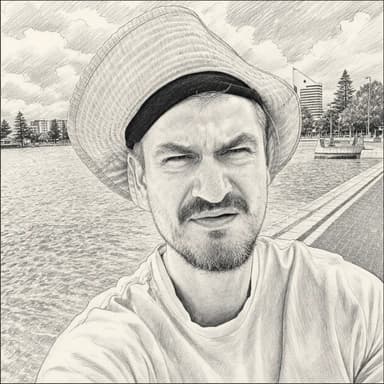
Dr Nikolay Shirokikh
RMODELLead
Australian Centre for RNA Therapeutics in Cancer (ACRTC), School of Human Sciences, The University of Western Australia
Decoding the language of RNA, one ribosome at a time
About
Nikolay Shirokikh is a molecular and RNA biologist. He leads RMODEL, the RNA Multi-Omics and Design Laboratory, at the Australian Centre for RNA Therapeutics in Cancer, School of Human Sciences, UWA, where he is Group Leader and Senior Lecturer, and co-leads Biocodecs with Alice Cleynen. His work asks how cells read messenger RNA, how fast, and what happens when that reading goes wrong. He produced the first genome-wide evidence of ribosomal scanning, published as first author in Nature in 2016, and developed translation complex profile sequencing (TCP-seq) to make that observation possible. His laboratory builds the instruments for reading every layer of RNA regulation natively and at single-molecule resolution, and applies them to how cancer cells survive treatment, how cells respond to stress within seconds, and how RNA can be designed to work better as a medicine.
The longer story
Nikolay's training began in two of the oldest traditions in protein biosynthesis research. He spent a first undergraduate year in Eugene Sverdlov's laboratory of the structure and function of human genes at the Shemyakin-Ovchinnikov Institute of Bioorganic Chemistry, then joined Alexander Spirin's Laboratory of Mechanisms of Protein Biosynthesis at the Institute of Protein Research in Pushchino. He stayed there for ten unbroken years, moving from laboratory technician in 2002 to intern, PhD student, principal engineer and finally research scientist.
In 2004 he crossed to Brooklyn as a visiting postgraduate student with Tatyana Pestova and Christopher Hellen at SUNY Downstate Medical Center. The question there was accuracy: how a cell manages to build proteins correctly, given that misfolded polypeptides accumulate and kill it. That work produced a new mode of translational accuracy control, published in the EMBO Journal in 2006 with Alan Hinnebusch, and a first-authored account of how the initiation factor eIF1A keeps scanning faithful, in the EMBO Journal and Genes and Development in 2007.
His doctorate turned the question around and asked how viruses cheat the same machinery. He led the discovery of non-canonical translation in poxviruses, published in PNAS in 2008 and since taken up into Fields Virology, and described viral RNAs that fold into structures outside the usual Watson and Crick rules. The PhD was conferred with honours by M.V. Lomonosov Moscow State University in March 2011.
Then he left academia for three years, which is the least conventional part of the arc and, he would argue, the most useful. He qualified as a patent expert with the USPTO and RUPTO and worked as a state intellectual property expert in biochemistry at the Federal Institute of Industrial Property in Moscow, reviewing more than twenty new US and international patent applications through to acceptance or rejection, many of them written by leaders in ribosome structure, genomics and transcriptome-wide RNA methods. In parallel he consulted for biotechnology: designing in vivo RNA transfection for producing transgenic proteins in human cells at Longevica Pharmaceuticals in New Jersey, and refining the analysis of microRNA function under physical stress at Bioclinicum in Moscow. He also designed and delivered new lecture courses, teaching more than five hundred medical higher degree students between 2009 and 2015. He was offered a three-year Dynasty Foundation postdoctoral fellowship in 2012 and turned it down, because at that point he had chosen the patents and the lecture theatre.
The route back into research was a single fellowship. In 2013 he won a European Fellowship from the Group of Eight Universities of Australia, awarded for the best collaborative projects proposed by European postdocs, to work at the Australian National University. He describes that fellowship as the foundation of everything that followed. He relocated to Australia in 2015.
In 2016 the collaboration produced the first genome-wide view of ribosomal scanning: the step in which a small ribosomal subunit inspects a messenger RNA to find where a gene actually begins. It was published in Nature as a co-first author paper and it made visible a layer of control that no previous method could see, including classical ribosome profiling. Roughly half of all messenger RNAs with longer leaders turned out to be regulated at scanning rather than at any later step. The method behind it, translation complex profile sequencing or TCP-seq, was released as a full protocol in Nature Protocols in 2017 so that other laboratories could use it, and it has since been adopted worldwide across yeast, mammalian and plant systems. He also wrote the Wikipedia entry for it himself, on the reasoning that a method nobody can look up is a method nobody will try.
Accepting an NHMRC Emerging Leadership Fellowship in 2020 let him start his own group, Protein Biosynthesis and Homeostatic Control, at the John Curtin School of Medical Research in 2021. The group set out to build one instrument for each layer of RNA regulation, and largely did: CHEUI and SWARM for chemical modifications in single molecules, RISER for real-time enrichment on the sequencer itself, INDEGRA for true RNA integrity and decay, STE for absolute translation rates, dirCLIP for isoform-resolved protein occupancy without amplifying the RNA, FracFixR for fractionated RNA-seq, and VX and T2GD for reading and designing transcriptomes with machine learning. The point of the collection is that the layers can finally be read together, natively, in the same sample.
Alice Cleynen visited that laboratory on a Marie Sklodowska-Curie fellowship in 2022 and 2023; he returned the visit in 2025 on a CNRS Poste Rouge residency in her group at IMAG in Montpellier. Four joint methods came out of it, and eventually Biocodecs did too, as a formal joint team spanning France and Australia with shared students on both sides.
He moved west in 2025 to lead the RNA Multi-Omics and Design Laboratory at the Australian Centre for RNA Therapeutics in Cancer, and to build in Western Australia a capability the state did not previously have: precise RNA multi-omics, quantitative transcriptomics and single-molecule epitranscriptomics. The laboratory is now the Australian methodological hub for nanopore direct RNA sequencing. He leads the ACRTC Innovation Pillar, works with Max Ward and Marcell Szikszai in Computer Science and with the UWA high-performance computing team on next-generation biocompute, and keeps an honorary group at the ANU.
Alongside the research he has spent fifteen years building the rooms the research happens in. He founded the ACT RNA Club and its RNA Salon, ran it from 2018 to 2024, and moved it fully online in March 2020, the first Australian meeting of its kind to do so. He is one of five founders of A-RNA, now Australia's primary RNA scientific society, incorporated in 2024. He co-founded the Shine-Dalgarno Centre for RNA Innovation. He founded and chaired the Early-Mid Career Research Committee at the ANU College of Health and Medicine, which created a COVID support scheme, a career development fellowship and a near-missed grant scheme for thirty to forty early career researchers a year. He hosted two Nobel laureates, Peter Doherty in 2022 and Craig Mello in 2024. In Perth he now runs the WA RNA Salon across UWA, the Harry Perkins Institute, The Kids Research Institute Australia and Curtin.
The through line, in his own framing, is speed. How quickly can a cell cope with a change in its metabolism, and how does it decide whether to repair itself or be eliminated? Both decisions are made faster than the nucleus can respond, and both run through the control of messenger RNA translation in the cytoplasm. That is the layer he has spent a career learning to read, and increasingly to write.
Keywords
Research Areas
Education & Training
- Postdoctoral Fellow (Group of Eight European Fellowship), The Australian National University (2015-2020)
- Patent expert, patenting in biochemistry, USPTO and RUPTO (2013)
- PhD, Biology (specialisation Molecular Biology, with honours), with Prof. Alexander Spirin, M.V. Lomonosov Moscow State University (2011)
- Visiting Postgraduate Student with Profs Tatyana Pestova and Christopher Hellen, SUNY Downstate Medical Center, New York (2004-2005)
- MSc, Biochemistry (specialisation Molecular Biology, with honours), M.V. Lomonosov Moscow State University (2003)
Contact & Links
Fun Facts
If I was…
- A science discovery
- The genetic code
- An animal
- A monkey (on the smart side)
- A drink
- Espresso, maybe triple
- A food
- Who asks such challenging questions? Lactose-free, protein-rich :-)
- A celebrity
- Duke Nukem
- A sport
- Tennis
- A novel
- The Foundation